


A wall sconce is the better choice for most hallways. It stays close to the wall, keeps the ceiling and floor clear, and works well in the narrow, low-ceilinged spaces most hallways have. A pendant light works better only in wider hallways, entryways, or landings with higher ceilings, where it can hang without becoming an obstacle.
The right answer still depends on your hallway's width, ceiling height, and how it connects to the rest of your home. Here's how to decide.
Wall Sconce vs Pendant Light
| Factor | Wall Sconce | Pendant Light |
|---|---|---|
| Best hallway width | Narrow (under 4 ft) | Wide (4 ft+) or entryways |
| Ceiling height needed | Any height | 8 ft or higher |
| Installation | Wall-mounted, no wiring in ceiling always needed | Requires ceiling wiring |
| Light spread | Soft, directional, ambient | Focused, downward pool of light |
| Best for | Long corridors, apartment hallways | Entry foyers, wide landings, statement moments |
Why the Choice Matters for a Hallway
A hallway is a transition space, not a room you sit in - so the lighting needs to do two things: light the path clearly, and not get in the way of people walking through it. That's the core difference between these two fixture types.
A wall sconce sits flush against the wall, so it never intrudes on headroom. A pendant light hangs down from the ceiling, which means it needs enough vertical clearance to avoid becoming a hazard in a space people walk through quickly.
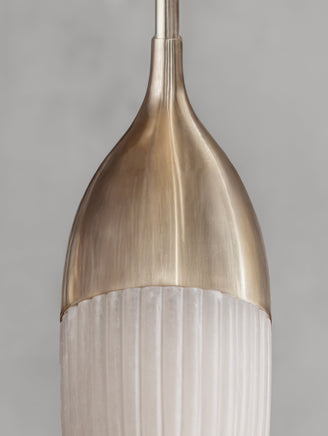
When to Choose a Wall Sconce
Wall sconces are the safer, more practical choice for narrow hallways and corridors.
Choose a wall sconce if:
Your hallway is narrower than 4 feet
The ceiling is lower than 8 feet
You want even, ambient light along a long stretch rather than one focal point
You're placing multiple fixtures along the same wall for a rhythmic effect
Explore designer wall lights and the full wall sconce lighting collection for hallway-ready options in marble and brass.
When to Choose a Pendant Light
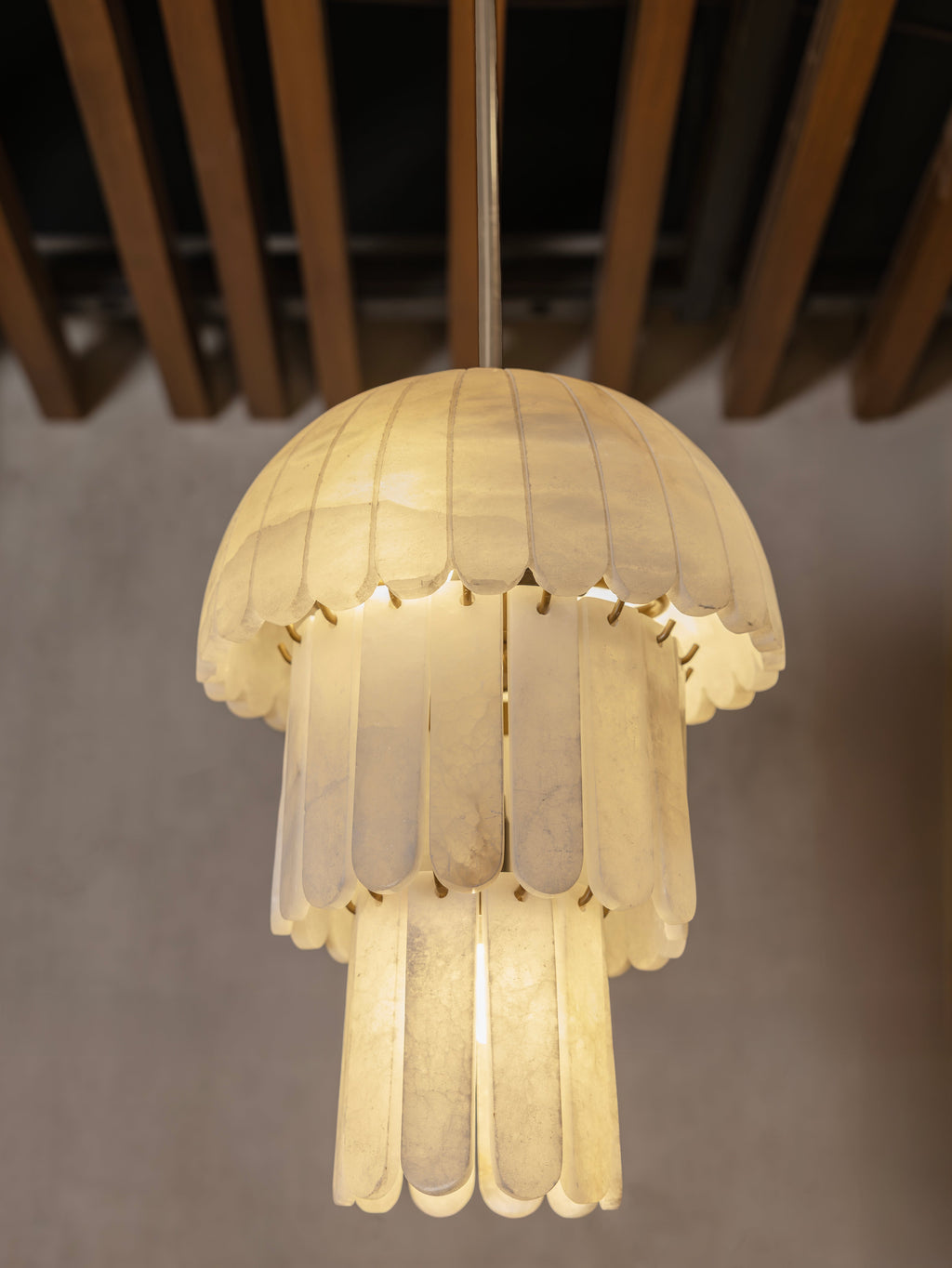
Pendant lights work best where a hallway opens up - an entry foyer, a wide landing, or a hallway that doubles as a gallery or display space.
Choose a pendant light if:
The space is wider than 4 feet or opens into a foyer
Ceilings are 8 feet or higher
You want a single statement piece rather than repeated fixtures
The hallway leads into a formal entry where a bit of drama is welcome
See decorative pendant lights and designer lighting for pieces suited to entryways and open landings.
Hallway-Specific Factors to Check Before You Buy
Width: Measure wall to wall. Under 4 feet, a hanging pendant will feel close enough to brush against - go with a sconce.
Ceiling height: Standard 8-ft ceilings can take a shallow pendant, but anything lower should stay with wall-mounted fixtures.
Foot traffic: High-traffic hallways - near a front door or between bedrooms - benefit from a sconce's out-of-the-way placement.
Existing wiring: Sconces are easier to add if you don't already have a ceiling junction box. Pendants need one, or a surface-mounted alternative.
Style continuity: If the rest of your home uses pendant lighting in living or dining spaces, a pendant in a wide hallway can carry that language through. See home lighting design for pairing ideas across rooms.
Can You Use Both in the Same Home?
Yes, and it's common. Use wall sconces along the narrow stretch of a hallway, then let a pendant take over where the hallway opens into a foyer or landing. This keeps the practical sections clear while still giving the entry a focal point.
For bedrooms off a hallway, a night lamp or table lamp can pick up the same material language as the hallway fixtures without needing to match exactly.
Styling Tips for Hallway Lighting
Space wall sconces 6-8 feet apart along a long corridor for even light without dark patches.
Keep pendant drop height at least 7 feet from the floor in any walkway.
Match the metal finish - brass, for instance - across sconces, pendants, and nearby decor pieces for a considered look rather than a mismatched one.
In a hallway that connects to a kitchen and dining space, let the pendant style echo what's above the dining table.
Browse the full range: lighting, luxury home decor, or new products for the latest additions.
FAQs
Q. Is a wall sconce or pendant light better for a small hallway?
A wall sconce is better for a small or narrow hallway. It stays flush to the wall and doesn't reduce usable width, unlike a hanging pendant.
Q. How high should a pendant light hang in a hallway?
Keep the bottom of the fixture at least 7 feet from the floor so it doesn't interfere with anyone walking underneath.
Q. Can I use pendant lights in a narrow hallway?
It's not recommended if the hallway is under 4 feet wide or the ceiling is below 8 feet. A wall sconce is the safer and more practical choice in that case.
Q. How far apart should wall sconces be placed in a hallway?
Space them 6 to 8 feet apart along the wall for consistent light coverage without dark gaps between fixtures.
Q. Do wall sconces give enough light for a hallway?
Yes. Wall sconces are designed for ambient, directional lighting, which suits a hallway's purpose of guiding movement rather than providing task lighting.
Q. What material works best for hallway lighting?
Brass and marble-accented fixtures hold up well in high-traffic areas and match easily with other decor and bathware pieces elsewhere in the home.
Q. Should hallway lighting match the rest of the house?
It doesn't need to match exactly, but keeping the same metal finish or material family - brass, marble, or a mix - creates a more cohesive feel from room to room.


