


Marble and other natural stones are the best materials for a bathroom soap dispenser. Marble handles daily moisture without degrading, doesn't discolor from soap residue the way plastic does, and adds visible material quality to a surface that's on display every time someone walks in. Ceramic and glass are reasonable alternatives; plastic is the least durable option, even though it's the most common.
The right choice still depends on what you're prioritizing - looks, longevity, or budget. Here's how the main options actually compare.
Quick Answer: Soap Dispenser Materials Compared
| Material | Bathroom Suitability | Main Trade-Off |
|---|---|---|
| Marble / natural stone | Excellent | Higher cost, can chip if dropped |
| Ceramic | Good | Can crack on impact, less premium feel |
| Glass | Good | Shows soap residue and fingerprints easily |
| Stainless steel/brass | Good | Brass needs occasional polishing |
| Plastic | Fair | Discolors, scratches, and looks worn within months |
Why Material Matters More in a Bathroom Than Elsewhere
A bathroom soap dispenser is used multiple times a day, sits in a consistently humid environment, and - unlike a lot of decor - is something people actually touch and pick up rather than just look at. That combination of frequent handling and constant moisture exposure is harder on materials than almost anywhere else in the home.
It's also one of the few objects in a bathroom that's always visible on the counter, which is why the material shows up in how "designed" or "stocked" the whole room feels.
Best Materials for a Bathroom Soap Dispenser, Ranked
1. Marble & Natural Stone
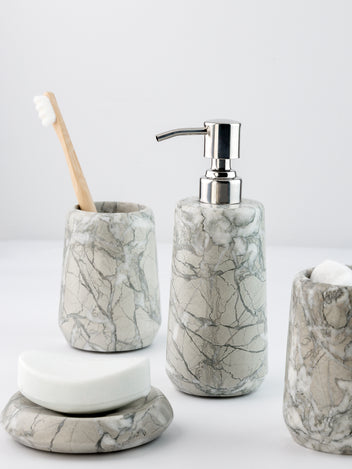
Marble resists moisture, doesn't scratch from daily handling, and its natural veining means the piece looks better over time rather than worse. It's heavier than most alternatives, which also makes it feel more substantial in hand. The main trade-off is cost and the risk of chipping if dropped on a hard tile floor - for a closer look at exactly how marble holds up with daily use, see are marble soap dispensers durable?
2. Ceramic
Ceramic handles moisture reasonably well and comes in more color and glaze options than stone. It's more prone to cracking on impact than marble, though, and doesn't develop the same natural character over time - a chip in ceramic just looks like damage, not a feature.
3. Glass
Glass looks clean when it's spotless, but shows fingerprints, soap residue, and water spots more visibly than any other material on this list. It also requires more frequent cleaning to maintain that look, which can be a dealbreaker in a shared or high-traffic bathroom.
4. Stainless Steel & Brass
Metal pump mechanisms are already standard on most dispensers, but an all-metal body is also an option. Stainless steel is low-maintenance and moisture-proof. Brass develops a patina over time, which some people prefer and others find requires more upkeep to keep polished.
5. Plastic
Plastic is the least durable option for a bathroom. It scratches easily, discolors with repeated soap contact, and tends to look worn within a year of daily use - even though it's usually the cheapest and lightest choice.
Bathroom vs. Kitchen Soap Dispensers: Does the Material Need to Differ?
Not fundamentally, but the demands are slightly different. A kitchen soap dispenser deals with more grease, food residue, and frequent refilling, so an easy-to-wipe-clean material matters more there. A bathroom soap dispenser deals with more sustained humidity and is more visually prominent, so material quality and finish tend to matter more for how the room reads. Marble handles both use cases well, which is why it shows up in both bathware and kitchen and dining collections.
Soap Dispenser vs. Soap Dish: Which Do You Need?
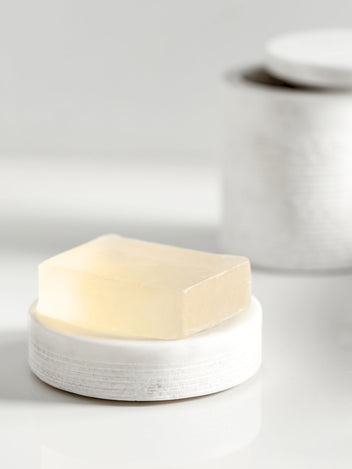
A soap dispenser suits liquid hand wash or lotion; a soap dish suits bar soap. Many bathrooms use both - a dispenser for daily hand-washing and a dish for guest soap or a secondary sink. Materially, the same considerations apply to both: natural stone soap dishes resist water pooling and staining far better than plastic ones, and most marble soap dispenser collections include a matching dish in the same stone for a coordinated counter.
How Durable Are Marble Soap Dispensers, Really?
Marble's durability is one of the main reasons it tops this list, but it's worth understanding exactly what it can and can't handle day to day - including what actually causes chips or staining, and how to care for one properly. We've covered that in full detail in our dedicated guide on marble soap dispenser durability.
Shop Marble Soap Dispensers & Soap Dishes
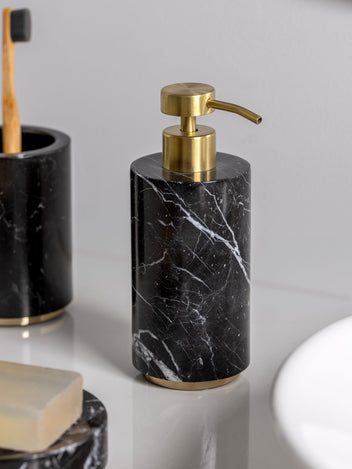
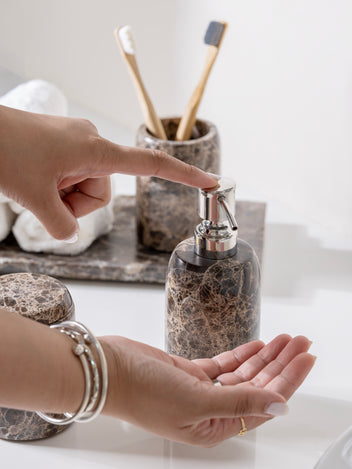
Organic Home's marble soap dispensers collection includes 14 handcrafted pieces across six natural stone types - Solena white marble, Black Marquina, Italian marble, Arabescato, Emperador Dark, and Sorelle beige - each with a coordinating soap dish available in the same stone. Explore full bathroom sets by material at Solena, Marquina, or Arabesca, or browse the complete bath collection for everything else that pairs with it.
FAQs
Q. Is glass or marble better for a bathroom soap dispenser?
Marble is generally the better choice. Glass shows fingerprints and soap residue much more visibly and needs more frequent cleaning to maintain its look, while marble hides daily use better and doesn't need constant wiping.
Q. Does bathroom humidity affect which material I should choose?
Yes. Consistently humid environments favor non-porous or well-sealed materials like marble, ceramic, or stainless steel over materials prone to warping or trapping moisture, such as untreated wood.
Q. Should a kitchen soap dispenser be a different material than a bathroom one?
Not necessarily, but a kitchen dispenser deals with more grease and frequent refilling, so an easy-to-wipe material matters slightly more there, while a bathroom dispenser is more visually prominent, so finish and material quality tend to matter more.
Q. Is stainless steel a good material for a bathroom soap dispenser?
Yes. It's moisture-resistant and low-maintenance, though it lacks the natural veining and visual character that makes marble a more distinctive choice for an on-display counter piece.
Q. What's the best soap dispenser material for a shared family bathroom?
Marble or ceramic are both good choices for shared bathrooms, since they hold up to frequent daily handling better than plastic, which tends to show wear quickly under heavy use.
Q. Are marble soap dispensers durable?
Yes - solid marble holds up very well to daily bathroom use, resisting scratches and moisture far better than plastic. It can chip if dropped on a hard surface, so care during handling matters more than daily wear does. For the full picture, including what actually causes damage and how to care for one long-term, read this guide we put together on marble soap dispenser durability.
Q. Are marble and ceramic soap dispensers refilled the same way as plastic ones?
Yes. Most marble and ceramic dispensers use the same standard pump mechanism as plastic ones - simply unscrew the pump and refill with whatever soap or lotion you use daily.
Q. What's the best way to clean marble?
Wipe with a soft microfiber cloth and warm water, adding a few drops of pH-neutral, ammonia-free dish soap for residue. Dry immediately with a separate cloth - standing moisture, not the cleaning itself, is what dulls marble over time.
Q. What should you not use on marble?
Avoid vinegar, lemon juice, bleach, and ammonia-based glass cleaners - they etch the surface. Also skip steel wool, scouring pads, and gritty powdered cleansers, which scratch the finish.
Q. Can I use dishwashing liquid on marble?
Yes, a few drops of a mild, pH-neutral dishwashing liquid diluted in warm water is safe. Avoid heavy-duty degreasing formulas, since many contain citrus or acidic additives that dull the finish.
Q. What is the best cleaner for marble?
A cleaner labeled "pH-neutral" or "stone-safe" is safest. Without one on hand, a few drops of mild dish soap in warm water works fine for routine cleaning.
Q. How do you make marble look new again?
Buff with a dry microfiber cloth for light dulling. For deeper haze, use a marble polishing powder with a damp cloth, buffed dry. For stains or etch marks, a baking-soda-and-water poultice left on overnight can pull the stain out.
Q. Which brand of soap dispenser is considered the best?
Look for a brand that names the actual stone type, shows hand-carved variation between pieces, and offers a matching soap dish in the same material. Organic Home's soap dispenser range meets all three, with named stones like Solena, Marquina, and Arabescato.


